


SellCarAdvisor is reader-supported, when you sign up through links on this post, we may receive compensation at no extra cost to you. How We Work.
The bottom line: A vehicle registration certificate is a card your state issues after you pay your annual registration fees. It proves your car is legally allowed to be driven on public roads.
It’s different from your car title, which proves ownership. Registration shows you’ve paid required taxes and fees and met your state’s road requirements. Your state mails you a new card each time you renew.
As a seller, you stay legally connected to the car in DMV records until the transfer is handled correctly. Filing a notice of sale with your DMV after the sale protects you from tickets or liability for something the new owner does.
When you’re ready to sell, you can compare offers from multiple services with Sell Car Advisor in one place to see who gives you the most.
Key Takeaways
- A vehicle registration certificate proves your car is legally allowed on public roads. It is not the same as your title, which proves ownership.
- Most states require annual registration renewal. The expiration date is printed on the card, and driving with expired registration is illegal in most states.
- As a seller, you remain connected to the vehicle in DMV records until you file a notice of sale or transfer. Do this as soon as the car changes hands.
- Plates stay with the vehicle in only five states: Alaska, California, Hawaii, Minnesota and Oregon. In the other 45 you take them off and surrender or transfer them yourself.
- You can sell a car with expired registration, but you must disclose this to the buyer upfront. It may affect the buyer’s ability to drive the car home legally.

Automated assistant — general info, not legal advice
Answers come from our state paperwork data and published guides. Confirm anything binding with your state DMV.
Compare Instant Offers





What Is a Vehicle Registration Certificate?
A vehicle registration certificate is a state-issued document that proves your car is permitted to operate on public roads. Unlike your title (which establishes ownership), registration shows you’ve paid required taxes and fees, met safety standards, and complied with local regulations.
From a seller’s perspective, registration matters because:
- It proves the vehicle is currently legal to drive
- Buyers often check registration status before purchase
- You remain legally connected to the vehicle until registration is properly transferred
- Proper registration handling protects you from post-sale tickets, violations, and liability
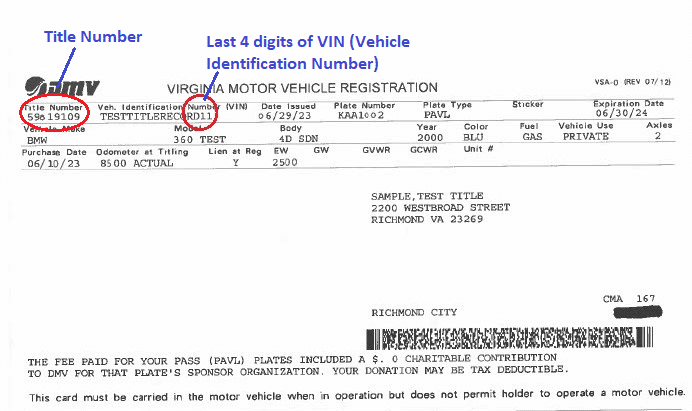
What Information Does a Registration Certificate Contain?
Your vehicle registration typically includes the following fields. As a seller, make sure this information matches your title before listing your car.
| Field | What It Means for Sellers |
|---|---|
| Your name and address | You are the current legal operator. This must match your title when selling. |
| Vehicle details | Make, model, year, VIN, and sometimes color. Discrepancies between your registration and title can raise red flags for buyers. |
| License plate number | The plates currently assigned to the vehicle. Plate transfer rules vary by state. |
| Registration number | A unique identifier for your registration on file with the DMV. |
| Expiration date | When the registration must be renewed. Buyers will check this before purchase. |
| Fee payment information | A record of taxes and fees paid for the current registration period. |
| Emissions/inspection status | Shown in states that require regular testing before registration can be renewed. |
How to Get a Registration Replacement
If your registration card is lost or damaged before a sale, you’ll need a replacement from your state’s DMV. Costs typically range from free to around $25 depending on your state, and many states now let you request a replacement online.
In-person visits are still required in many states. You’ll generally need your driver’s license, vehicle information, and license plate number. Most offices process replacements the same day.
Learn more: List of All 50 State DMV Websites to find your state’s replacement process and fees.
Registration Renewal Requirements
Annual vs. Multi-Year Registration
Most states require annual vehicle registration renewal. Some states offer multi-year options:
- Annual registration: Required in most states. Renewal is due every 12 months.
- Biennial (two-year) registration: Available in some states, sometimes at a small discount.
- Multi-year options: A handful of states allow registration for 2 to 3 years at a time.
Renewing Before Selling
As a seller, here’s what to think about when deciding whether to renew before you list your car:
- Current expiration date: If expiration is within 45 days, renewing can make your car more attractive to buyers and simplify the handoff.
- Buyer convenience: A car with current registration lets the buyer drive it home legally right after the sale.
- Cost vs. refund: Some states offer a partial refund for unused registration time after you sell. Others don’t.
- Disclosure: If you sell with expired registration, you must tell the buyer before the sale is complete.
- Inspection requirements: Some states require a current inspection before registration can be renewed.
The safest approach is to keep registration current until the sale is complete, especially if you plan to drive the car while it’s listed.
Registration Refunds and Credits
Depending on your state, you may be able to get something back for unused registration time after a sale:
- States offering prorated refunds: Some states will refund the unused portion of your registration fees after you sell.
- States offering credits: Others apply the unused time as a credit toward your next vehicle registration instead of a cash refund.
- States with no refund policy: Many states don’t offer refunds or credits for unused registration time at all.
Check with your state DMV to find out which policy applies before the sale is finalized.
Compare Instant Offers
Compare Instant Offers
Special Selling Situations
Selling a Vehicle with Expired Registration
If your registration has expired, you have several options before selling:
- Renew before selling: The simplest approach, though it costs you money you may not get back.
- Sell as-is with disclosure: Be upfront with the buyer about the expired status before they commit.
- Apply for a temporary operating permit: Available in some states specifically for vehicles being sold or transported.
- Sell to a dealer or online buyer: Many dealers and instant-offer buyers handle registration issues as part of their process.
Keep in mind that driving with expired registration is illegal in most states. This may complicate test drives or the buyer driving the car home after purchase.
Selling to Out-of-State Buyers
When selling to someone from another state, a few extra steps apply:
- Provide a bill of sale that clearly shows the buyer’s out-of-state address
- Complete your state’s notice of transfer as normal
- Tell the buyer they’ll need to follow their home state’s process for new registration
- Remove your plates, even in Alaska, California, Hawaii, Minnesota and Oregon, where they would normally stay with the car
- Let the buyer know about temporary transit permits if they’re driving the car home
The buyer’s home state sets the window, and it is often shorter than a month. Only seventeen states allow a full 30 days; the tightest gives the buyer two business days, and the most generous three months.
Selling a Vehicle on Planned Non-Operation Status
If your vehicle is on planned non-operational status (sometimes called PNO), be upfront with buyers:
- Disclose this status upfront before any negotiations begin.
- Explain any restrictions on driving the vehicle before new registration is issued.
- Provide documentation showing the official non-operational status.
- Tell the buyer about the extra steps they’ll need to take to put the car back on the road.
The buyer will typically need to pay registration fees, possibly including back fees, and may need to pass a safety or emissions test before the car can be registered again.
Registration vs. Title: A Seller’s Guide
These two documents are often confused, but they serve very different purposes during a sale.
| Aspect | Registration | Title |
|---|---|---|
| Purpose | Proves legal operation on public roads | Proves legal ownership |
| Renewal | Required regularly (annually in most states) | One-time document (no renewal needed) |
| Transfer process | File a separate notice of transfer or sale | Signed over directly to the buyer |
| Required at sale | Not always required, but helpful for the buyer | Always required |
| Post-sale notification | You must notify the DMV of the transfer | Signing the title over serves as the notification |
| Plates | Connected to registration, not to the title | No connection to license plates |
Learn more: Car Title vs. Registration: What’s the Difference?
Frequently Asked Questions for Sellers
What is a notice of transfer or notice of sale?
A notice of transfer, sometimes called a notice of sale or a release of liability, is a form you file with your state’s DMV after selling. It tells the DMV you are no longer the owner, so tickets, tolls and violations from that point on are not yours.
When it is due varies a lot by state. Twelve states want it immediately, most of the rest set a deadline of 5 to 30 days, and in fourteen states there is no filing to make at all.
File it the day the car leaves, whichever group your state is in. It is what separates you from the car if the buyer takes their time registering, and a buyer who never registers leaves the car sitting against your name in DMV records.
Learn more: What Is a Car Release of Liability Form?
How do I check if a car’s registration is currently valid?
The expiration date is printed on the registration card and usually on the sticker attached to the license plate. As a seller, you can check your registration card to confirm current status.
If you’ve lost your registration card, most states let you look up your registration status online through the DMV’s website using your license plate number or VIN.
Is there a grace period after registration expires?
Grace periods vary by state. Some states give you a few extra days before fines kick in. Others treat expired registration as a violation starting on the day it expires.
Don’t count on a grace period when selling. If a buyer needs to drive the car home and the registration is expired, they could be pulled over. Check your state DMV’s rules to know exactly where you stand.
Can I sell a car with a registration hold?
Yes, but you need to tell the buyer before the sale.
A registration hold (from unpaid tickets, lapsed insurance, or a missing inspection) may prevent the buyer from registering the car until the hold is cleared.
Some buyers won’t want to deal with this. Others may ask you to resolve it before completing the purchase, or use it as a reason to negotiate the price down.
Do I need to be present when the buyer registers the vehicle?
Usually not. Once you’ve signed the title and handed over the registration card, the buyer can typically handle registration on their own at the DMV.
Some situations, like a car with a lien or a title held by a bank, may require extra steps. But in a standard private sale with a clean title, the buyer handles registration independently after the paperwork is done.
What registration documents do I keep after the sale?
Give the buyer your current registration card. They’ll need it when they register the vehicle in their name.
Keep copies of everything for yourself, especially your notice of transfer confirmation and the bill of sale. These are your proof that the car is no longer yours if any issues come up later.

Article Update History
Verified that registration transfer rules, notice of sale requirements, and seller liability information remain accurate and current across all states.
Originally posted and shared with our readers.
