I want to take the guesswork out of selling your car. I analyze market data, decode DMV title laws, and test out online car buyers to give you a straight answer on whether it's worth holding out for a higher price or if you're better off taking the most convenient offer and moving on.
Published:Apr 12, 2025
Last Updated:Jul 12, 2026
✓ Fact Checked:Mar 8, 2026
How is this page verified?
Information on this article is compiled from publicly available data, customer feedback and our internal analysis. All our articles are being constantly updated and fact-checked annually to ensure accuracy, timeliness, and relevance.
The bottom line: To sell a car for parts, first figure out if parting it out will earn you more than selling it whole.
Get a quote from Peddle or Wheelzy as a baseline. This tells you what the car is worth to buyers who take it as-is, with free towing.
Then check what your most valuable parts sell for. Search eBay’s sold listings for your exact make, model, and year and look at the catalytic converter, engine, transmission, and electronics.
If the combined part values are a lot more than the whole-car quote, start removing and selling the most valuable parts first. Once you’ve sold those, a scrap yard will typically pay $150 to $300 for the remaining shell.
If you’d rather skip the work, compare offers from multiple services with Sell Car Advisor to find who pays the most for your car as-is.
Non-running vehicles: $150 to $700 (essentially scrap metal value)
Running with problems: $300 to $1,500
Damaged but drivable: $500 to $3,000
These services handle the paperwork and towing, which is convenient but comes at a cost. You may leave 50 to 70% of your car’s potential value on the table compared to parting it out yourself.
For specialty or rare vehicles, look for model-specific forums and Facebook groups where enthusiasts gather. These buyers often pay more for hard-to-find parts.
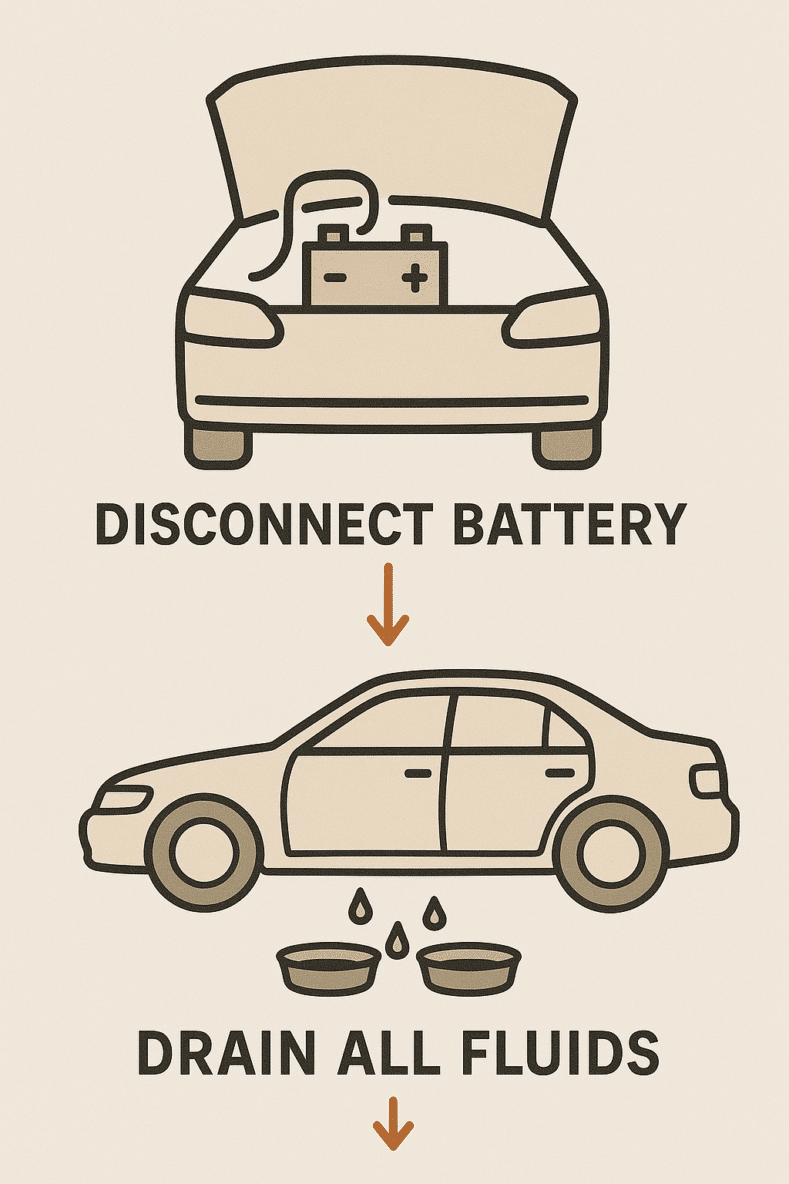
Properly dispose of all fluids and hazardous materials. Many auto parts stores accept used oil, coolant, and other fluids for free recycling.
Is It Worth the Effort?
The question comes down to how you value your time versus money.
Parting out typically takes 20 to 40 hours over several weekends
The potential extra earnings compared to selling whole: $1,000 to $2,500
Many find they develop useful mechanical skills along the way
For those who’ve successfully parted out a car, the extra money was generally worth the time, especially when facing tough financial circumstances or saving for a replacement vehicle.
If you enjoy hands-on projects and learning how your car works, the process can be satisfying beyond the financial reward.
FAQs
Can I sell a car for parts without a title?
It depends on your state and buyer. Individual part buyers typically don’t require a title since they’re buying components, not the vehicle.
However, if you want to sell the remaining shell to a scrap yard, most will require a title or proof of ownership.
If the title is lost, you can apply for a duplicate at your local DMV before you start dismantling.
Yes, but expect a lower offer. Online car buyers will still purchase vehicles missing components, but they’ll reduce their offer based on what’s gone.
Always disclose missing parts when getting quotes so the offer reflects the actual condition.
Do I owe taxes when I sell car parts?
In most cases, no. If you’re selling parts from a personal vehicle you used and the total you receive is less than what you paid for the car, there’s typically no taxable gain.
However, if you regularly part out vehicles as a business activity, different tax rules may apply.
Article Update History
Fact-checked
Part value ranges were verified against current eBay sold listings for common makes and models. Whole-car quote ranges were confirmed using quotes collected from Peddle, Wheelzy, and CashForCars. Companies process details were cross-checked against each buyer's current review page on this site.